Connecting Current Events to Government Concepts

Welcome to the Platteville High School AP Government Blog. Here we continue classroom discussion and connect current events to course concepts.

Monday, January 11, 2016

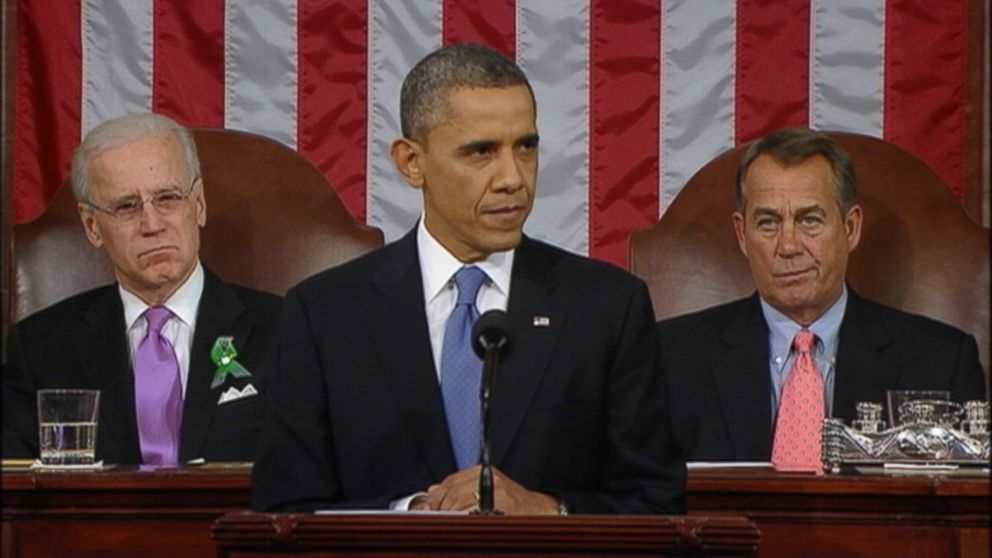
State of the Union Address - January 12, 2016


Article II, Sec. 3, of the U.S. Constitution
"The President shall from time to time give to Congress information of the State of the Union and recommend to their Consideration such measures as he shall judge necessary and expedient."

Pretty vague, huh?

Tuesday, January 12th, 2016, President Barack Obama will give his seventh and final State of the Union Address (his speech in 2009, given in the first month of his presidency doesn't count as an official SOTU).

In the article provided in class, you read a little about the history of the SOTU address.  A Brief History of the State of the Union Address from Mental Floss is an interesting read that will give you more information about his this even has developed over time.  Pay close attention to the precedents set (especially by Washington, Jefferson, and Wilson), because the ambiguity of constitutional requirement meant that Presidents have some flexibility.

Clearly, television has fundamentally changed how the SOTU is delivered.  TV has also shifted the role of the speech in U.S. politics.  While it used to be a speech (or letter) directed to Congress, television makes the speech more directed toward the American people in the presence of Congress.  Check out these memorable State of the Union moments (Washington Post) and these memorable speeches (NBC).  One thing you may notice is that in recent speeches, it is not always the speech itself that gets all the media attention, but things like guests of honor or the behavior of attendees (like this infamous shout from Rep. Wilson).

After you watch the speech, write a reaction and post it as a comment below.  (Hint: write it in a document and then copy/paste.)  In your reaction, respond to some or all of the topics below:
  • Topics : Were the issues predictable?  Did any of his topics, ideas, or opinions surprise you?
  • Persuasiveness : Did you find Obama to be generally persuasive?  On what topics was he most persuasive; on what topics was he least persuasive?  Explain why you think so.
  • What did you think of all the "pomp and circumstance?" (applause procedures, etc).
  • Effect : Do you think this speech will have any effect on the congressional or national agenda?
  • What did you think of the Republican response?
Also, please post a reply to at least 1 other student to further discuss the issues raised.

Wednesday, November 4, 2015

Voter ID Laws and Civil Rights

States affected by the Civil Rights Act of 1965
(and therefore the SCOTUS decision of 2013)
In the summer of 2013, the Supreme Court -- in a 5-4 decision -- struck down section 4 of the 1965 Voting Rights Act as unconstitutional.  This key provision, when it was in effect, subjected districts
with a history of discrimination in voting (particularly the Deep South) to additional oversight by the Department of Justice.  The conservative decision, in short, said that the formula determining which districts required additional oversight was outdated.  The liberal perspective holds that the VRA is still critical in preventing discrimination at the polls.

States that has implemented voter ID
or other laws to restrict voting
This SCOTUS decision made it easier for many states to pass "voter id bills," which have become the center of the current debate regarding discrimination at the polling place.  Across the nation, states with Republican leadership are passing laws that require voters to show picture ID on election day.  The Republican rationale is that Voter ID bills, like the one passed in Wisconsin, will prevent in-person voter fraud.  The Democratic response has been that the bills are a supposed solution without a real answer.  They assert that in-person voter fraud is not a major problem, and that instead these bills are designed to suppress the votes of poor people, minorities, the elderly (least likely to have a driver license), young people and students (most likely to move and therefore not have a current ID) and women (most likely to change their name) -- all of whom are statistically likely to support Democrats.  Some Republicans have referenced how these bills can also be understood as strategies to decrease Democratic voter turnouts, as demonstrated by Pennsylvania Representative Turzai (R), and more recently by Governor Chris Christie.

As you can see, we have a significant difference in the way the two parties view the situation.  The core difference is that Republicans tend to believe the biggest problem is preventing voter fraud; while Democrats believe the biggest problem is people who should be allowed to vote being denied their right to do so.

What do you think? (Due by Monday, 11/9)
  • Read up on several perspectives about the voter ID bill in Wisconsin (which was first implemented in the Tuesday election) and similar bills around the nation.  Just to get you started, here is a conservative editorial (WSJ), and here is a liberal argument (Mother Jones), but you should also look elsewhere (please share sources).
  • Keep in mind that finding valid statistics is really difficult in this case, as each side uses different studies (not to mention most of the debate is theoretical and doesn't often discuss the statistical frequency of fraud).  Having said that, this article (ABCnews) takes a non-partisan look at each side's view of the numbers.
  • Post a comment to this post recording your thoughts on voter ID bills or responding to the thoughts of your classmates.  Are these bills discriminatory or simply good governance?  Are they a political strategy or necessary measures?  Is requiring a voter ID requirement a new form of poll tax (see Twenty-Fourth Amendment)?  What evidence jumps out at you as most influential in shaping your opinion of these bills?

Friday, May 23, 2014

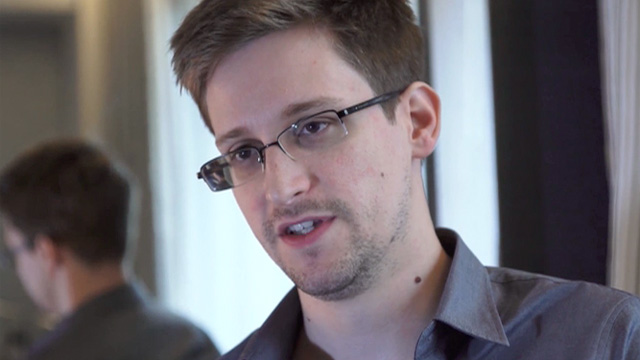
First Draft of History: Edward Snowden


How should American view Edward Snowden?

Using the following resources to support your opinion (and feel free to use others, but please link them so others can check your source if they intend to comment), post your feelings about how Americans should view Edward Snowden.


Jeffrey Toobin contends that Snowden is no hero, while the ACLU considers him an important whistleblower in calling attention to the government overstepping its rights by invading the privacy of American citizens.  Daniel Ellsberg, the man famous (infamous?) for leaking the Pentagon Papers to the New York Times during the Vietnam War, naturally relates to Snowden and considers his actions to be service to the nation.

Wednesday, February 5, 2014

Congressional Budget Office (CBO)

An excellent story for teaching about congressional agencies... one day too late.


As NPR reports, the CBO's projection of Obamacare's impact on jobs is not pretty.  Remember, the CBO's job is to project the cost of legislation Congress has passed or is considering.

As we have discussed in class, both parties have a tendency to use their own numbers to support their claims.  What this story also highlights is that even the CBO numbers -- which, despite coming from a non-partisan, official congressional agency -- are often politicized.

Its interesting: While Republicans have recently had a tendency to dismiss the CBO numbers (or outright attack it), they will surely be using these new numbers in their 2014 campaigns.  Likewise, while the Democrats have recently been using CBO numbers to claim Obamacare victories, the White House is now downplaying and disputing the recent report.

Of course, while "non-partisan" and "official" numbers are often better than the alternatives, that doesn't mean they are always correct.

Tuesday, February 4, 2014

Farm Bill Expected to Pass


I recommend checking out this NPR story and this CBS story on the farm bill that is expected to pass.  As we talked about in class, the 5-year farm bills are often "christmas tree bills" full of earmarks.  This one will be no different.

Friday, October 4, 2013

Bias in the Shutdown Coverage


Later in this course, we will examine the role of the American media in politics.  The government shutdown, however, provides an interesting and important case study in media presentation that just can't wait.  I recommend this NPR story:

Monitoring For Signs of Bias in Media's Shutdown Reporting (Morning Edition, NPR, 10-4-13)

How have the broadcasts and webpages you follow been presenting the news?  Try to check out the "other side" -- you'll notice an entirely different take on the "blame game."

Thursday, September 26, 2013

A Government Shutdown?

As you are likely aware, we currently have a divided government (the presidency and Senate are held by Democrats and the House is controlled by Republicans).  Divided government inevitably results in showdowns like the one currently going on in Washington.  By October 1 -- the beginning of the fiscal year for the national government -- the Congress (both houses) have to pass a spending bill to keep the government operational.  While there are many areas of agreement, there is one fight that persists in the current showdown:

The House of Representatives passed a bill that funds the government, but removes all funding for Obamacare.  Essentially, they hope to repeal Obamacare without literally repealing Obamacare.

In the Senate, passed a "clean" funding bill, which does not defund Obamacare.  This was an expected outcome because the Democrats clearly had the votes and clearly would not defund Obamacare, but that didn't stop Republican Senator Ted Cruz from dominating headlines over a "faux" filibuster protest against the passage.

This is a classic showdown in which both sides are hoping to win the political battle, but -- presumably -- neither side really wants the battle to end in a government shutdown.  Its basically a game of political chicken.

Consider the potential result if a government shutdown really does occur.  The Washington Post has an overview of previous shutdowns that actually happened.  AP speculates what it might look like this time around:


Read up about the battle online (if this is news to you, I recommend starting here) and decide for yourself:
  • Are the Republicans out of line to attach a defunding Obamacare demand to a crucial spending bill, or should the Democrats take up the bill as the House passed it?  
  • What other motives do you see in this political fight?
  • What should current Congressmen have learned for past government shutdown battles?
  • Do you think the shutdown will actually occur?  Why or why not?
Sorry I forgot to clarify how to actually do this assignment in class: Respond to some or all of the above discussion questions (or record other thoughts) in a "comment" to this post.  (I think you should be able to use your school google account.)

Wednesday, May 30, 2012

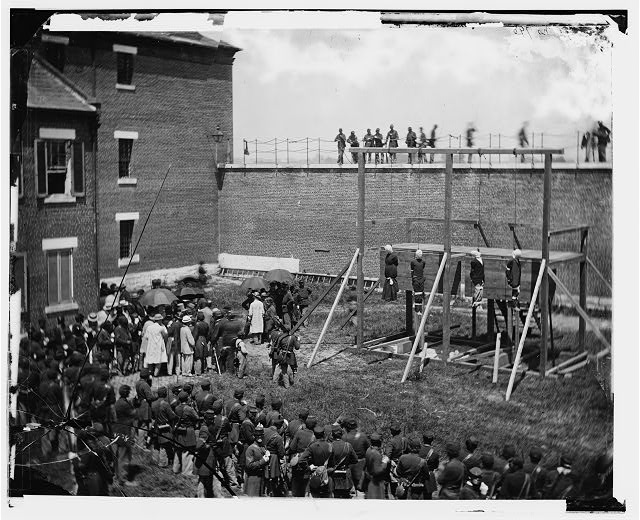
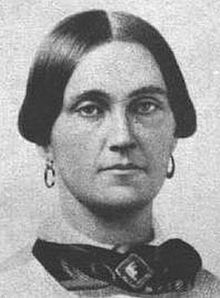
The Case of Mary Surratt: The Conspirator


The case of Mary Surratt, the only woman accused in the conspiracy to kill the President, Vice President, and Sec. of State, is an interesting and complicated case study in examining the right to a fair trial.  This movie presents the case from the perspective of Frederick Aiken, a young lawyer and war hero.  His perspective is particularly interesting and complicated, as it presents us with both moral and legal questions regarding wartime law, the use of the death penalty, and the role of revenge in punishment.


"'Equal justice under law' is not just a caption on the facade of the Supreme Court building.  It is perhaps the most inspiring ideal of our society."
-- US Supreme Court Justice Lewis Powell, Jr

"In all criminal prosecutions, the accused shall enjoy the right to a speedy and public trial, by an impartial jury... and to be informed of the nature and cause of the accusation; to be confronted with the witness against him; to have compulsory process for obtaining witnesses in his favor, and to have the Assistance of Counsel for his defense.
-- Sixth Amendment

Blog Post: Response to one of the following prompts.  In addition, respond to a classmate's blog post (it can be one the same prompt or not).  Clarify by the titles provided which prompt you are responding to.

1.) Military Tribunals: Using the example of Mary Surratt or others, describe and discuss the critical differences between a civil court and a military tribunal.  Why is the use of military tribunals with civilians controversial?  Do you think it is appropriate to try civilians in this way?  If so, in why circumstances?

2.) Trials in Wartime: Using the example of Mary Surratt or others, explain how war can change the processes of the legal system.  How does public opinion play a role in cases like Surratt's?  What differences do you notice about the trial due to its connection to the Civil War?

3.) Rights or Revenge?: Using the provided excerpt from Aiken's closing argument, discuss whether Mary Surratt's trial was about rights or revenge (or somewhere in between).  Explain Aiken's comparison of lawyers and soldiers.  Explain what you think Abe Lincoln meant in the quote used by Aiken.  Do you agree with Aiken that the commission has the choice of "preserving Surratt's rights, or revenge?"

  • Excerpt from Frederick Aiken's closing argument: "For the lawyer as well as the soldier, there is an equally imperative command.  That duty is to shelter from injustice the innocent, to protect the weak from oppression and, when necessity demands, to rally to the defense of those being wronged.  'At what point shall we expect the approach of danger?  Shall some transatlantic military giant step the ocean, and rush at a blow?  Never!  I answer, if danger ever reach us, it must spring up amongst us.  If destruction be our lot, we must ourselves be its author and finisher.  As a nation of freemen, we must live through all time, or die by suicide.'  Those words were spoken by a struggling young attorney.  His name? Abraham Lincoln.  Do not permit this injustice to Mary Surratt by sacrificing our sacred rights out of revenge.  Too many have given their lives to preserve them"

Thursday, April 12, 2012

The Budget in an Election Year

Obama Renews Push for "Buffett Rule," Romney Pushs for Ryan Plan


Listen to this NPR story about how Mitt Romney has embraced the "Paul Ryan budget."  The Paul Ryan budget - named after the Wisconsin Republican Congressman who is credited as the chief author and introduced it to Congress - characterizes current conservative fiscal thinking.  In short, it calls for significant cuts to spending while maintaining current tax cuts and extending new tax cuts.

The Obama budget, which characterizes liberal fiscal thinking, calls for a new tax on the super rich - the so-called "Buffett Rule," named after Warren Buffett, the billionaire who has suggested taxing the super rich at higher rates - while cutting less from domestic spending.

After you have an understanding of the practical and ideological differences between the Obama and Romney (Ryan) budget, write a reflection on (1) which budget is a better solution to the current fiscal situation, and (2) how these contrasting budgets will play a role in the 2012 presidential campaign.

Consider some of the following in your response;
  • Which budget do you think will be more popular among independents and "swing voters?"
  • How do these budgets reflect the ideology of their proponents?
  • Where do you see the greatest strengths in each of these budgets (fiscally and politically)?
  • Where do you see the greatest weaknesses of each of these budgets?
  • Do you see any compromise here?  Do either of these plans deal with entitlements and mandatory spending?  Which plan is better?


Wednesday, January 11, 2012

Who Is Your Candidate?


Wondering whether President Obama or one of the Republican candidates best reflects your views and ideology?  Take this short quiz from USA Today.

Saturday, December 10, 2011

A Guide to Political Contributions

The New York Times has an interactive guide to understanding several typical types of political donations.  By looking at fiscal electioneering from the perspective a billionaire wanting to donate $10,000 to help Democrats win back the House of Representatives, a college student looking to donate $25 to a candidate in need, or anything in between, we can learn a lot about how the actual donation process - including limitation and loopholes - actually work.

The site, which is updated to reflect ramifications of the Citizens United decision, is well worth the time.

"Creative Cartography" - A Closer Look at Gerrymandering

It just so happens that gerrymandering - the politicized process of redrawing congressional district maps after a census - is still a lingering issue.  While the last census, which is done every 10 years, was done in 2010, the political battles over redrawing the maps in many states continues.  That, in short, is why the issue stays in the news.  The fight is especially intense in Texas, where the Supreme Court has decided to step in, Arizona, Florida, where they are just getting started, and even here in Wisconsin.

video platformvideo managementvideo solutionsvideo player

To best understand the current battles and likely outcomes, we need to rewind and take a closer look at the 2010 midterms.  While - like the upcoming 2012 election - unemployment and the economy in general were viewed as the most significant issues in the minds of voters, the opportunity to redistrict - the golden political opportunity that comes a long once a decade - also rested on that election.  When we look across the nation and we see that it is often Democrats crying foul about largely Republican-friendly maps, we remember that 2010 was a big Republican victory.

In considering the exceptional impact of these maps, it could certainly be argued that the 2010 midterms were much more important to national politics than was recognized by the electorate, as midterms traditionally do not attract the attention of a presidential election.

In 2010, The New York Times ran an article called "How to Tilt an Election Through Redistricting" that is especially helpful in understanding the strategies used by politicians and their consultants in gerrymandering.  Take a look at the article, especially the example maps that demonstrate "packing," "cracking," and other strategies.


Friday, November 4, 2011

Generation Gap


On November 3, NPR featured a story on the Pew Research Center's report on how different generations currently view politics.  As the story points out, older generations (such as the "silent generation") tend toward more conservative politics, and younger Americans (the "millennials," the generation including you) lean liberal.  A simple explanation, as we discussed in class, is that liberals tend to see change as progress and conservatives tend to view current policy as tried and tested.  The data provided by the study, however, adds to our understanding.

The following day, NPR followed up with a story suggesting how this might impact the upcoming presidential election.  As this story explains, the millennial generation - despite the general observation that younger Americans are disengaged from the political process - was significantly involved in Barack Obama's election.  Obama's support from the youngest group of voters was unprecedented and an important element of his success in 2008.  Not only did young voters tend to vote for Obama, they turned out to vote like never before, and they volunteered and supported Obama beyond their votes.

After listening to (or reading) both these stories, write a brief reflection on what it helps us understand regarding the role of age in politics.  In your response, consider the some of the following:

  • Why do you think Obama was successful in motivating young voters when past presidents has struggled to gain their support or have even neglected them as a demographic?
  • How will the current political agenda affect who turns out to vote?  What issues will Obama or the Republican candidate need to emphasize to motivate their base constituents?
  • Based on your answer to that, who do you think will be more effective?
  • How can we explain the significant differences between how the different generations view and trust government?  Why is their such a difference in how the generations view America in the world? (see American exceptionalism)
  • Makes some predictions about the upcoming election.  Is there a Republican candidate who you see as best situated to capitalize on what these studies suggest?  Is this good news for either party?
  • Any other observations or conclusions?  What in these studies is most important, interesting, or surprising?

Wednesday, October 5, 2011

Frontloading


If you have been following the news of the Republican presidential primaries, you may have noticed discussion about states moving the dates of their primaries.  Unlike the general election, states do not hold primaries on the same day; the separation of primary elections allows for a more drawn out nomination process, gives candidates a chance to work specific states critical to their overall political strategy, and gives all (or at least, most) states an opportunity to receive particular attention from the candidates.

These may be good reasons to separate the primaries, but there are some apparent downsides to organizing a presidential nomination process in this way.  For one, it makes the entire process resemble horse race coverage by the media.  Sometimes, it's almost as if you can hear the fast-talking race announcer shouting about how another horse just pulled into the lead!

In addition to the downsides of horse race coverage by the U.S. media, there are concerns about the current trend toward frontloading.  Frontloading - a procedure in which the states increasingly schedule their primary earlier in the campaign to receive more attention and have a greater impact in the overall nomination - is a trend that continues.  This year, South Caroline and Florida have already adjusted their primary schedules to assert greater control in deciding the nomination.

Based on the cartoon above and basic research on frontloading, write a response to your thoughts on the frontloading of presidential primaries.

  • What is the motivation to move your primary?  What are the downsides?  What are some of the unintended consequences?
  • What are the pros and cons of horse race media coverage?  Consider the implications for lesser-known candidates, candidates with more extreme position, and mainstream candidates.
  • What effect do you think the schedule has on voter turnout? political efficacy? trust in political parties and the government?
  • If you see this as a problem, what solutions might alter the situation?  If not, why do you think is the best scenario?

Monday, March 7, 2011

The Living Room Candidate - Campaigns and the Media

 For this blog post, we will be using the Living Room Candidate website.


For this blog post, you will be conducting an analysis of two presidential TV campaign advertisements from any election except 2008.  You will access these ads from livingroomcandidate.org.  Your post must include all of the following:

1. A brief historical background of the election.  Who ran?  Who won?  Is there a consensus on the major determinants of the election? (why did the future president win that particular election?)

2. Two embedded video clips - one from each major party.  To do this, copy and paste the embed code (visible when you select "share" from the bottom right-hand corner of the video.

3. An comparative analysis of the two advertisements.  A full analysis will consider the following:
  • Which ad did you find more persuasive? Why?
  • Who do you think was the intended audience for each of the ads?  What evidence supports this?
  • Which ad did you find more aesthetically appealing?  Why?
  • How important were images and music in the ads you chose?
  • Other thoughts about what makes one political ad better and more effective than the other.

Tuesday, February 8, 2011

Rethinking Mt. Rushmore

 Its time to rethink our most famous multi-president monument.


In this blog post, you will be making a recommendation about your president for inclusion or rejection from the new monument, which will include a larger scope of American history.  Your task is not merely a reaction to the typical conventional  wisdom of the great American presidents, but rather a researched report on why a president should be considered for this honor or rejected.

To do this, you will use the textbook discussion of presidential character and the article provided in class from political scientist and scholar Fred Greenstein.  Your recommendation should include a somewhat comprehensive view of the president.  In other words, do rely on one point; consider the many hats of the presidency and analyze your presidential choice as chief legislator, commander-in-chief, chief executive, head of state, chief of party, chief diplomat, and guardian of the economy.  For each area you analyze, give the president an A through F grade to allow easier comparisons.

After all recommendations have been received by the Committee to Redefine Rushmore, members will vote and carving will begin.

Wednesday, December 22, 2010

Census 2010: Congressional Reapportionment


Look at some of the analysis of the recently released 2010 census data.  It appears that much of the population shift can be attributed to migration to the South and West.  Here you can find some of the most notable changes and this graphic illustrates the population shifts and the political changes this causes.

Using your knowledge of redistricting and gerrymandering, explain how the population shifts benefit Republicans.  What do the midterm elections have to do with this?  Do you think the changes are fair?  What effects do you think this will lead to nationally or locally?

Extending the Bush-era Tax Cuts

The lame duck Congress recently voted to extend the so-called "Bush-era tax cuts."  The extension is the product of a compromise made through negotiations between President Obama (while not actually a congressional voter, he is the leader of the Democratic party, so Democrats follow his lead) and Republican leadership in the Senate.  Click here for an illustrated representation of the deal and the failed alternatives.

Understanding these tax cuts are far more critical than simply knowing how much your family owes the government.  Taxes represent one of the most fundamental and significant differences between our two major parties.  To simplify, Democrats want progressive taxes that tax the rich at higher rates so that the government can provide necessary services while the Republicans believe in a more standardized, or "flat" tax structure that taxes similarly across incomes, so that the rich might stimulate the economy.  Underlying this divide is a philosophical division: Democrats believe the government spends tax money most fairly and appropriately, while Republicans believe this money is spent best by the earners.

Where do you fall in regard to these divisions?  What do you think is more important: tax breaks for everyone?  Tax breaks for the middle and lower classes only? 

The ideological division remains when we move to the topic of reducing the deficit.  To reduce the deficit, do you think it is better to reduce spending or increase revenue?  You balance the budget and decide which you favor.  After you have balanced the budget on the interactive website, report back to classmates sharing whether you preferred cutting spending or increasing revenues and why.

Wednesday, November 10, 2010

Should Photo ID be Required to Vote in WI?

Wisconsin's new state Senate Majority Leader Scott Fitzgerald has announced that next year, after the Republicans elected Nov. 2 take control, the first order of business will be requiring photo id at the polling place.

Remember how this issue connects to ideology - Democrats tend to favor less restrictions in voting on the grounds that it reduces democracy and Republicans tend to favor more restriction on grounds of reducing fraud.  You be the judge.

To better understand how this issue connects voting and ideology, you can listen to a radio debate on the topic on WPR's Joy Cardin show.

Do your research: this blog post discusses the viewpoints of Barrett (D) and Walker (Governor-elect - R) on photo IDs at the polls.   This editorial explains the proponent argument and this blog post and this blog post take the opposing viewpoint.

Would this really disenfranchise voters?  Who would be most affected?  Do you think fraud is an issue in Wisconsin?  Is this a solution without a problem or a needed change?  How does this issue reflect the larger ideological battles regarding voting in America?

Monday, November 8, 2010

Political Participation and Technology

First, listen to the predictions of Matt Bai, a New York Times journalist on how technology will impact voting and political participation.


Do you agree with him? What predictions would you add?  Bai mentions voting online, but what other forms of political participation will technology influence or completely change?  How will communication between citizens and leaders change?  How do you think social networking plays a role in political participation?